


No results found
The Secrets of "Lai See" (Red Packet) for Chinese New Year!
Hong Kong Living | May 13, 2020
It is almost Chinese New Year and we can see Hong Kongers are busy preparing for the festival. Red packet money, also called “lai see”, is one of the reasons why they are so busy.
Hong Kong people are estimated to give nearly HKD 10 billion in “lai see” as gifts during this CNY period. Assuming there are 3 million recipients, the average person would get HKD 3,333 during the holiday. While that’s a respectable haul, it won’t get you very far in Hong Kong’s sky-high real estate market. For HKD 3,333 you could rent a 500 square foot Hong Kong apartment for almost 4 whole days or buy a whopping 0.15 square feet (or 22 square inches) of a typical Hong Kong apartment, that’s about the size of your smartphone.
How much do you know about this “lai see” custom? Let’s see if you can answer all of the following questions.
1. What is “lai see”?
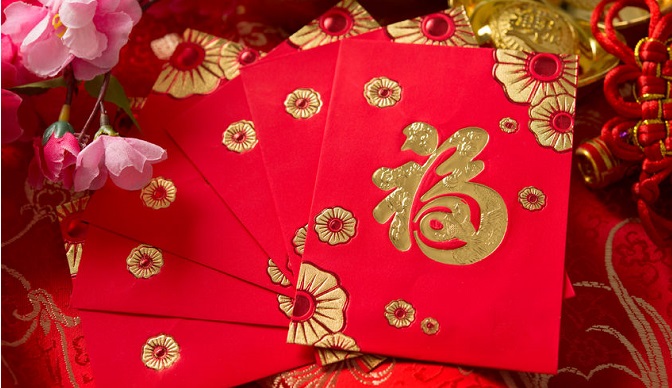
“Lai see” is a little red envelope with money inside. The money is normally in the form of a banknote but not coins.
2. Why people give out “lai see”?
The red colour symbolizes good luck in the Chinese culture so giving out “lai see” is to wish others good luck in the new year. The “lai see” can also serve to thank others for their contribution in the past as well as to express good will.
3. Who gives “lai see” to whom?
“Lai see” is not randomly given to others. There are two possible situations. First, “lai see” is given from people of higher status to that of lower status. For example, “lai see” is given from old to young (age) and from senior to junior (power). Second, “lai see” can be given from the people who receives the service to people who provides the service.
4. What are the procedures for giving and receiving “lai see”?
Normally, people will greet each other by saying some good words such as Kung Hei Fat Choi (Wish you good luck) and Sun Nin Fai Lok (Happy new year). Then, people will give out “lai see” as a response to the greetings. The receiver can say other good words or simply say thank you upon getting the “lai see”.
5. What amount of money do people usually put in the “lai see” packet?
Nowadays, Hong Kong people usually put $20 or $50 in their “lai see”. Those with higher incomes or those looking to be exceedingly generous can give $100 or even $500. It is noteworthy that people usually put only one note in the packet. That means if you plan to give out a $100 red packet, you usually put in one $100 note but not two $50 notes. You shouldn’t give “$40” as the number 4 is bad luck in Hong Kong.
6. What are the rules of giving “lai see”?
If you are married, you should give out two “lai see” packets per recipient. One packet is given from you, and the other is given from your spouse. Even if your spouse is not physically present on the occasion, you have to give out the “lai see” packet on his/her behalf. If you are single, you only need to give one packet out each time.
You should avoid using old and scrunched up bank notes. The Chinese new year symbolizes a new start, so it is preferred to use new and unfolded bank notes.
If your “Year of the Dog” resolution is to find your dream apartment, visit Spacious now! We wish you a very happy Chinese new year!